
Quick answer
Bipolar I means at least one full manic episode: a very high or irritable period that lasts at least a week, or is severe enough to need hospital care. Bipolar II means hypomanic episodes, which are less severe and don't disrupt daily life as much, plus at least one major depressive episode, and never full mania. Bipolar II isn't simply a milder version, because depression often takes up much of the time. Telling them apart matters, because it shapes which treatment is safest and most likely to help.
Key takeaways
- Bipolar I involves at least one full manic episode, while Bipolar II involves hypomania and depression but never full mania.
- Hypomania is less severe than mania and often feels good, which is one reason Bipolar II is frequently missed.
- Bipolar II isn't simply a milder version; for many people, depression takes up much of the time and can be very disabling.
- Telling the two apart matters because it shapes which treatment approach is safest and most likely to help.
Bipolar I and Bipolar II are often described as a spectrum of severity — as if Bipolar II is simply a milder version of Bipolar I. This framing is understandable but incomplete. They are related but meaningfully distinct presentations with different clinical features, different treatment considerations, and different patterns of functional impairment.
Understanding the distinction matters not just for diagnostic accuracy but for treatment — because what helps Bipolar I may not be the optimal approach for Bipolar II, and misidentifying which is present has real clinical consequences.
The Defining Difference: Mania vs. Hypomania
The distinction between Bipolar I and Bipolar II rests on one critical difference: the presence or absence of a full manic episode. Bipolar I requires at least one lifetime manic episode — a distinct period of abnormally elevated, expansive, or irritable mood and increased goal-directed activity or energy, lasting at least seven days, and severe enough to cause marked impairment in social or occupational functioning, require hospitalization, or include psychotic features. The NIMH recognizes mania as a defining feature of Bipolar I that can produce severe disruption and require urgent clinical intervention.
Bipolar II requires at least one hypomanic episode and at least one major depressive episode — but explicitly requires that no full manic episode has ever occurred. Hypomania is a distinct period of elevated or irritable mood and increased activity that is noticeable to others and represents a change from baseline, but is not severe enough to cause marked impairment or require hospitalization. The NIMH describes hypomanic episodes as like manic episodes but less severe and less disruptive to daily life.
Is it this or that?
Bipolar I, or bipolar II?
| Bipolar I | Bipolar II | |
|---|---|---|
| The high periods | At least one manic episode: very high or irritable mood and energy for at least 7 days, or severe enough that hospital care is needed. | Hypomanic episodes: like mania but less severe, and they don't interfere as much with daily life. No full manic episode, ever. |
| Depression | Separate depressive episodes usually happen too, though one isn't needed for the diagnosis. | At least one major depressive episode is part of the diagnosis. Many people spend long stretches in a low-grade depressed state. |
| How it can feel from the inside | People in a manic episode often don't think anything is wrong. Severe episodes can include psychosis (losing touch with reality). | Hypomania can feel very good and productive. Family and friends may notice the change before the person does. Hypomania doesn't include psychosis. |
| Is it milder? | Mania is the more severe kind of high. | Not overall. The depression can be heavy and long-lasting, and the disability that comes with bipolar II is comparable to bipolar I. |
Bipolar I
- The high periods
- At least one manic episode: very high or irritable mood and energy for at least 7 days, or severe enough that hospital care is needed.
- Depression
- Separate depressive episodes usually happen too, though one isn't needed for the diagnosis.
- How it can feel from the inside
- People in a manic episode often don't think anything is wrong. Severe episodes can include psychosis (losing touch with reality).
- Is it milder?
- Mania is the more severe kind of high.
Bipolar II
- The high periods
- Hypomanic episodes: like mania but less severe, and they don't interfere as much with daily life. No full manic episode, ever.
- Depression
- At least one major depressive episode is part of the diagnosis. Many people spend long stretches in a low-grade depressed state.
- How it can feel from the inside
- Hypomania can feel very good and productive. Family and friends may notice the change before the person does. Hypomania doesn't include psychosis.
- Is it milder?
- Not overall. The depression can be heavy and long-lasting, and the disability that comes with bipolar II is comparable to bipolar I.
General information, not a diagnosis. Based on the National Institute of Mental Health and the CANMAT and ISBD bipolar treatment guidelines.
What This Means for the Person’s Experience
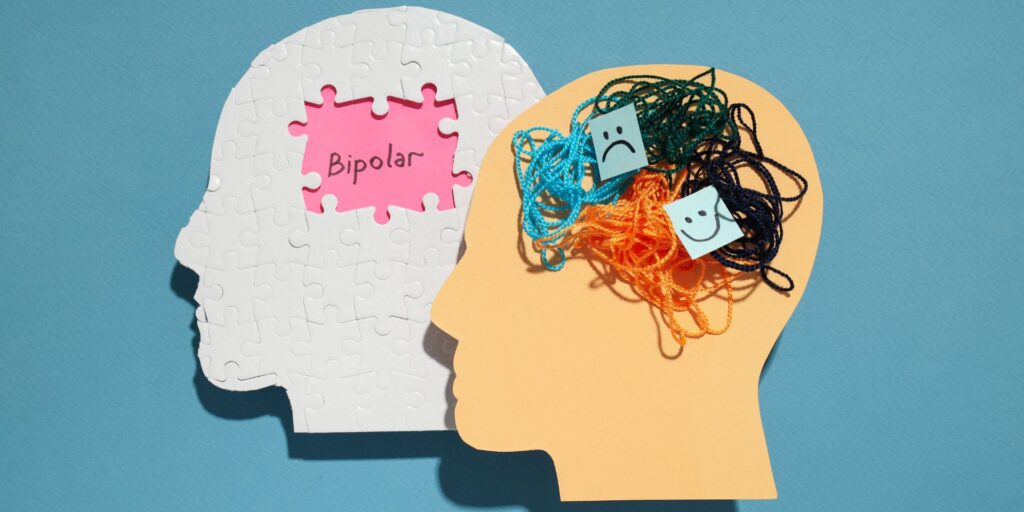
Full mania — the defining feature of Bipolar I — typically produces unmistakable disruption: significantly reduced sleep without fatigue, racing thoughts, dramatically increased goal-directed activity, grandiosity, impulsive behavior with serious consequences. People in full manic episodes are often not aware that anything is wrong. Episodes can last weeks and may require hospitalization.
Hypomania — the elevated pole in Bipolar II — is more subtle. The person functions at an elevated but often productive level. They may be more energetic, more confident, more socially engaged, and more creatively generative than at baseline. People in hypomanic episodes often feel good and do not recognize the episode as abnormal. This is one of the reasons Bipolar II is frequently missed — the elevated periods do not look obviously problematic from the outside or feel obviously problematic from the inside.
Depression as the Primary Burden in Bipolar II
For many people with Bipolar II, depression is the dominant clinical feature — far more time is spent depressed than hypomanic, and the hypomania may be brief enough that it is missed entirely. This is one reason Bipolar II is so frequently misdiagnosed as recurrent unipolar depression.
Myth or fact? Bipolar II
Choose an answer for each to see the explanation. Nothing is saved.
1Bipolar II is just a milder version of bipolar I.
Myth. Hypomania is less severe than mania, but that doesn't make bipolar II milder overall. People with bipolar II spend about as much time with symptoms as people with bipolar I, mostly depression. International treatment guidelines call the idea that bipolar II is a less severe form discredited.
2If I feel great and I'm getting a lot done, it can't be a mood episode.
Myth. Hypomania can make a person feel very good and productive, with no sense that anything is wrong. What marks it is a clear change from your usual self that others can notice, such as more energy, less need for sleep or faster thoughts.
3Bipolar II is often first treated as ordinary depression.
Fact. People with bipolar II may seek help only during depressive episodes, and hypomanic episodes can go unnoticed. That's why a careful evaluation looks at your mood history over your lifetime, and your family history, not just how you feel today.
Treatment Differences

The treatment of Bipolar I and Bipolar II shares important common ground — mood stabilizers are central to both — but there are clinically meaningful differences. Lithium has strong evidence for Bipolar I and some evidence for Bipolar II. Lamotrigine is a common option for preventing future episodes in Bipolar II, though the evidence for treating an acute Bipolar II depression is mixed. The use of antidepressants is more complex and more debated in bipolar disorders generally, as antidepressants can trigger hypomanic or manic episodes.
Accurate diagnosis of which type of bipolar disorder is present — or whether the presentation is bipolar disorder at all, versus unipolar depression with other features — is essential because it directly determines what treatment approach is most likely to be safe and effective.
Frequently Asked Questions
Is Bipolar II less serious than Bipolar I?
Not in terms of suffering or functional impact. While the hypomanic pole of Bipolar II is less severe than full mania, the depressive burden in Bipolar II is often profound and prolonged. Many people with Bipolar II experience the depression as the most disabling aspect of their illness, and Bipolar II carries significant risks — including elevated suicide risk — that are comparable to Bipolar I.
Can Bipolar II become Bipolar I?
If a person with a Bipolar II diagnosis experiences a full manic episode, the diagnosis would be updated to Bipolar I. This is uncommon, since a Bipolar II diagnosis usually stays stable over time, but a manic episode can sometimes be triggered by antidepressant use without a mood stabilizer — which is one of the most important reasons that antidepressant prescribing in bipolar disorder requires careful clinical judgment.
How is hypomania different from just feeling really good?
Hypomania represents a distinct change from a person’s baseline — it is noticeable to others, not just to the person themselves. It is not simply a period of elevated mood or high productivity that occurs naturally. The key features are that it represents a departure from the usual self, involves specific symptoms of elevated energy and mood, and is persistent rather than situational.
Can you have bipolar disorder without ever being depressed?
Bipolar I can technically be diagnosed on the basis of a single manic episode without a formal depressive episode, though depression is extremely common in Bipolar I over time. Bipolar II requires at least one depressive episode by definition — the diagnosis cannot be made without a documented depressive episode alongside the hypomania.
If you are uncertain whether what you are experiencing is Bipolar I, Bipolar II, or something else entirely — the distinction matters clinically and deserves careful evaluation.
The science: how we checked this
Sources
- National Institute of Mental Health: Bipolar Disorder
- Yatham LN et al. CANMAT and ISBD 2018 guidelines for the management of patients with bipolar disorder. Bipolar Disorders, 2018
How we checked this
- How bipolar I and bipolar II are defined, what hypomania can feel like, others noticing the change, psychosis in severe episodes, and bipolar II being missed when people seek help only for depression: NIMH, Bipolar Disorder.
- Hypomania not including psychosis, bipolar II being as disabling as bipolar I, time spent with symptoms (mostly depression), and the "less severe form" idea being discredited: the CANMAT and ISBD 2018 guidelines (section on bipolar II disorder).
- Written in our own words from the sources above.
Live in New Jersey? Start your intake packet.


