Quick answer
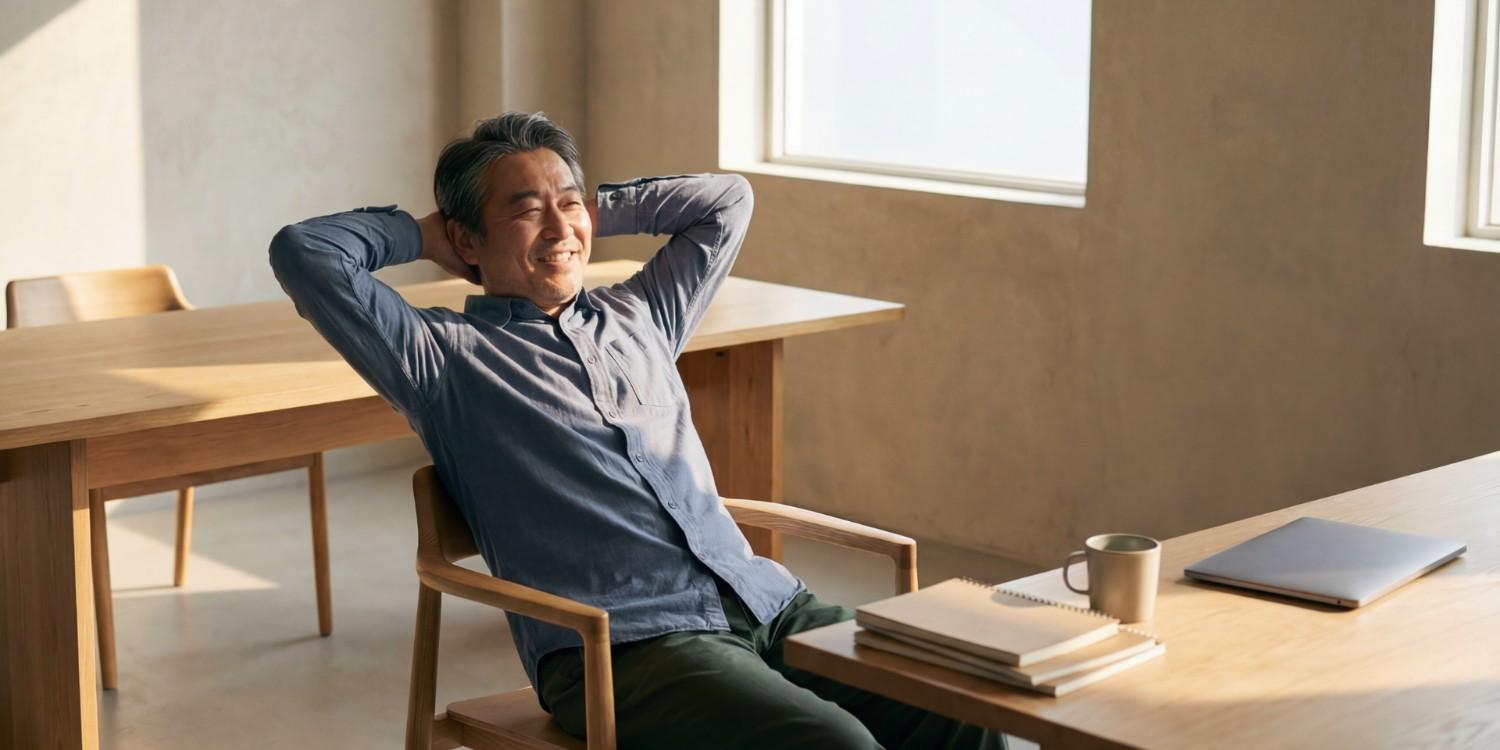
If slowing down brings a rush of anxiety, it's often because your nervous system has been running in high gear and doesn't settle the moment the demands stop. The answer isn't to avoid rest or force yourself into complete stillness, but to slow down in steps: less sensory input, slow breathing, and short breaks between activities. If it's persistent and affects your quality of life, it's worth getting support.
Key takeaways
- When your nervous system has been running in high gear, sudden stillness can feel uncomfortable rather than restful.
- The goal isn't to go from full speed to a full stop, but to slow down gradually with transition time between activity and rest.
- Cutting back on screens and noise during rest and making your out-breath longer than your in-breath can help your body settle.
- When difficulty resting is persistent and affects your quality of life, it may reflect a treatable condition worth a clinical evaluation.
If slowing down consistently brings a flood of anxiety, emotion, or mental noise, the instinct is often to simply avoid it — to keep the schedule full, the screen on, the tasks coming. This works as a short-term strategy. It also tends to narrow the life and delay addressing whatever the busyness has been managing.
Learning to slow down without becoming overwhelmed is not about gritting through intense discomfort. It is about understanding why stillness is jarring and approaching deceleration in a way the nervous system can actually tolerate.
Why Sudden Stillness Can Feel Jarring
For a nervous system that has been running in a sustained state of activation, a sudden drop in external demands is disorienting — not restful. The physiological activation does not immediately decrease when the demands do. The system that has been oriented toward tasks and output does not instantly reorient toward rest.
A sudden shift to full stillness is not experienced as relief. It is experienced as a change in state that the system does not quite know how to handle. When the operating conditions have been high-stimulation and high-demand for an extended period, that becomes the baseline. Anything that differs significantly from it — including genuine rest — can register as uncomfortable. The NIMH lists feeling restless or having trouble relaxing among the signs of generalized anxiety disorder. This helps explain why people managing anxiety disorders often find rest harder, not easier, than being busy.
The Principle: Deceleration Rather Than Full Stop
The most useful reframe is this: the goal is not to go from full speed to complete stillness. It is to move through gradations — to allow the nervous system to decelerate incrementally rather than being asked to shift immediately from activated to settled.
This looks different for different people, but the principle is consistent: build transition time into the shift between active and restful states, rather than treating them as binary.
Myth or fact? Slowing down
Choose an answer for each to see the explanation. Nothing is saved.
1If resting makes you more anxious, you're doing rest wrong.
Myth. When your nervous system has been running in high gear for a long time, its activation doesn't drop the moment the demands do. Feeling uneasy at first is common. It's a sign the shift needs to be more gradual.
2Slow breathing, at around six breaths a minute, can shift your body toward a calmer state.
Fact. A systematic review of slow breathing found it increased heart rate variability (a sign the body's rest-and-recover system is more active), along with more relaxation and fewer signs of arousal and anxiety. The studies were in healthy adults.
3The goal is to go straight from busy to completely still.
Myth. The goal is to slow down in steps, building transition time between being active and resting, rather than treating them as on or off.
Practical Ways to Begin
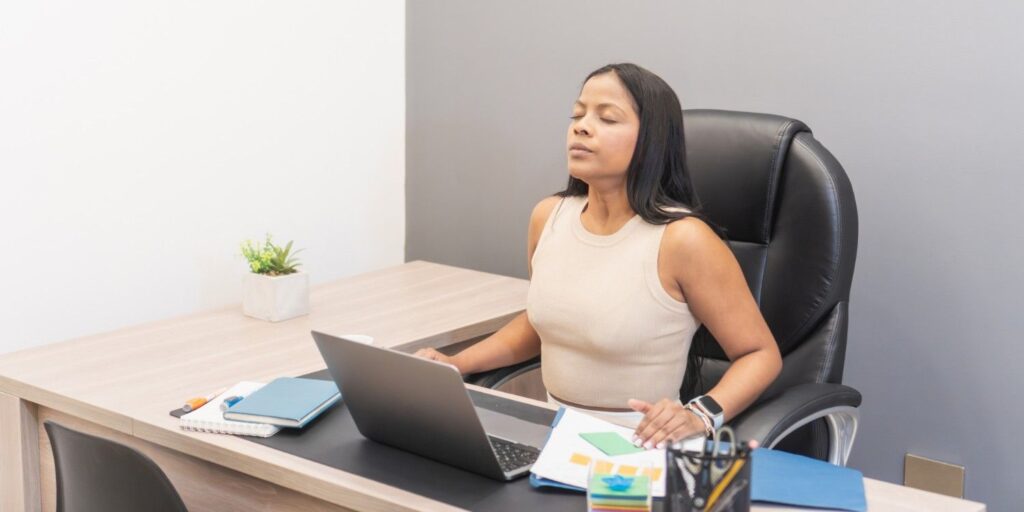
Reduce sensory input during rest periods. Screens, background noise, and constant information flow keep the nervous system engaged even when the body is physically still. Rest that includes high sensory input is often not neurologically restful. Reducing stimulation — not eliminating it, but reducing it — supports genuine deceleration.
Use paced breathing deliberately. Slow, deliberate breathing is one of the most direct ways to activate the parasympathetic nervous system — the branch that governs rest and recovery. Research available through the National Institutes of Health has found that slow-paced breathing at around five to six breaths per minute produces measurable shifts in heart rate variability and nervous system state. Making the out-breath slightly longer than the in-breath can begin to shift physiological state in a noticeable way.
Build transition time between activities. Rather than moving immediately from one demand to the next, building even a few minutes of unstructured time between them creates small opportunities for the system to begin resetting. Allow what surfaces to surface gradually. When difficult thoughts or emotions arrive in moments of quiet, allowing them to be present briefly — without immediately acting on them or suppressing them — is a skill foundational to both supportive therapy and integrated psychotherapy approaches.
Small steps
Ways to start slowing down
Tick the ones you want to try this week, then copy your list. Nothing is saved or sent.
When Professional Support Helps
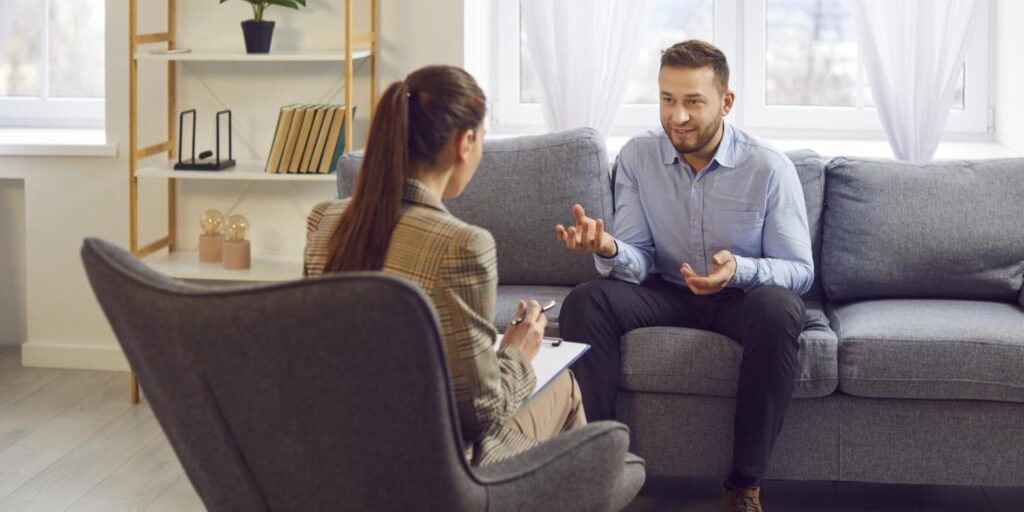
For many people, these strategies are enough to begin building a more comfortable relationship with rest. For people whose difficulty slowing down is driven by significant anxiety, depression, or burnout, the strategies help — but they do not address the underlying condition. When the difficulty is persistent and significantly affects quality of life, clinical support is the most direct path to change.
Frequently Asked Questions
Why does slowing down make me feel anxious instead of relaxed?
For a nervous system that has been running in sustained activation, a sudden shift toward stillness is disorienting, not immediately settling. The physiological activation does not automatically decrease when external demands do. This is not a problem with rest — it is a signal that the transition needs to be more gradual, and often that the underlying activation level deserves clinical attention.
What is the best breathing technique for anxiety?
Slow-paced breathing at around five to six breaths per minute — making the out-breath slightly longer than the in-breath — is well supported by research for shifting the body toward a calmer state. This is not a cure for anxiety but it is one of the most direct and accessible tools for acute symptom management.
How long does it take to build a genuine capacity for rest?
It varies significantly depending on how entrenched the activation pattern is and whether the underlying condition is being addressed directly. For some people, gradual practice over several weeks produces meaningful change. For others, particularly when anxiety or depression is driving the pattern, progress is faster when clinical treatment is involved alongside behavioral strategies.
Is difficulty resting a sign of something more serious?
It can be. When difficulty slowing down is persistent, significantly affects quality of life, or is accompanied by other symptoms — disrupted sleep, chronic tension, mood instability, low motivation — it is worth a clinical evaluation. Difficulty resting is often a symptom of an underlying condition that is treatable, not simply a habit to be changed through better self-management.
If rest feels more exhausting than being busy — if quiet brings anxiety rather than relief — that pattern is telling you something about what is happening beneath the surface. You do not have to manage it alone.
The science: how we checked this
Sources
- Zaccaro A et al. How Breath-Control Can Change Your Life: A Systematic Review on Psycho-Physiological Correlates of Slow Breathing. Frontiers in Human Neuroscience, 2018
- National Institute of Mental Health: Generalized Anxiety Disorder
How we checked this
- Slow breathing (including studies at about 6 breaths a minute), heart rate variability, relaxation and lower anxiety: the 2018 systematic review by Zaccaro and colleagues.
- Feeling restless or having trouble relaxing as a sign of anxiety: NIMH.
- The other myth cards and the checklist sum up this article's own explanation and advice.
- Written in our own words from the sources above.
Live in New Jersey? Start your intake packet.


