
Quick answer
Hypomania is a stretch of at least 4 days of unusually high or irritable mood with more energy and activity than usual, often with less need for sleep, racing thoughts and extra confidence. It's milder than mania and doesn't need hospital care, so it can feel like finally being well rather than a symptom. It matters because it's part of bipolar disorder, and it's often missed when people seek help only for depression. Tracking your mood, sleep and energy, and telling your provider about past highs, helps get the diagnosis and treatment right.
Key takeaways
- Hypomania often feels like finally being well, with more energy, more confidence and less need for sleep, which makes it easy to miss.
- It's milder than full mania, but it's still a real departure from your usual baseline.
- People usually seek help during depression, so past high periods can go unmentioned and a bipolar diagnosis can be missed.
- Tracking your mood, sleep and energy over time, and listening to what family or partners notice, helps make the pattern visible.
Hypomania does not typically feel like a problem. That is part of what makes it so clinically significant — and so frequently missed.
Most people who experience hypomania describe it as finally feeling like themselves, or better than themselves. Energy that exceeds the normal baseline. A mind that moves faster and more creatively. Confidence that replaces the usual self-doubt. Productivity that makes up for the periods of depression. This does not feel like an episode of illness. It feels like wellness.
What Hypomania Actually Is
Hypomania is a distinct mood state characterized by elevated or irritable mood, increased energy or goal-directed activity, decreased need for sleep, increased confidence, faster thinking, increased talkativeness, and in some presentations increased impulsivity. It differs from full mania in severity and functional impact — hypomanic episodes do not cause marked impairment or require hospitalization — but it is nevertheless a mood state that represents a significant departure from the person’s baseline.
Is it this or that?
A good stretch, or hypomania?
| A good stretch | Possible hypomania | |
|---|---|---|
| Sleep | You still need your usual amount of sleep. | You need much less sleep than usual and don't feel tired. |
| Thoughts and speech | Clear, at your usual pace. | Racing thoughts, talking fast, jumping from idea to idea. |
| Decisions | Your usual sense of risk. | Risky choices feel manageable; spending, sex or other pleasurable activities may increase. |
| What others notice | You seem like yourself, in a good mood. | Family and friends may notice changes in mood and activity that seem unusual for you. |
A good stretch
- Sleep
- You still need your usual amount of sleep.
- Thoughts and speech
- Clear, at your usual pace.
- Decisions
- Your usual sense of risk.
- What others notice
- You seem like yourself, in a good mood.
Possible hypomania
- Sleep
- You need much less sleep than usual and don't feel tired.
- Thoughts and speech
- Racing thoughts, talking fast, jumping from idea to idea.
- Decisions
- Risky choices feel manageable; spending, sex or other pleasurable activities may increase.
- What others notice
- Family and friends may notice changes in mood and activity that seem unusual for you.
General information, not a diagnosis. What counts is the change from your own usual self, lasting at least 4 days. If highs like these have come before or after periods of depression, mention them to your provider, and read how bipolar disorder is evaluated and treated.
Why It Feels Like a Good Period

Confidence increases, often significantly. The self-doubt and hesitation that normally moderate decisions recede, and things that would ordinarily seem risky feel suddenly manageable. There is often an elevated or expansive quality to the mood: a sense of possibility, of being unusually clear-sighted, of finally seeing things as they really are. The NIMH identifies these features — elevated mood, decreased need for sleep, increased goal-directed activity, and expansive thinking — as core features of the hypomanic episode.
When the Consequences Accumulate
The answer becomes clear when the consequences accumulate. The business started during hypomania proves to have been impulsive and financially damaging. The relationship ended or the important conversation had during hypomania was handled with less care than it deserved. The projects started proliferate and none are completed. The sleep deprivation, while subjectively tolerable during the episode, produces its own downstream effects. And the depression that follows — often severe in bipolar disorder — lands against the backdrop of the consequences from the hypomanic period.
Why Hypomania Is So Often Missed
People rarely present for clinical care during hypomanic episodes because hypomanic episodes do not feel like problems. They present with depression — and without adequate attention to the hypomanic episodes that preceded the depression, the bipolar diagnosis is missed. The treatment for unipolar depression, applied to what is actually a bipolar condition, can worsen the course.
Myth or fact? Hypomania
Choose an answer for each to see the explanation. Nothing is saved.
1If I felt great and got a lot done, it can't have been a symptom.
Myth. Hypomania can make a person feel very good and productive, without any sense that something is wrong. Family and friends may be the first to notice.
2Hypomania is often missed because people seek help for depression, not for the highs.
Fact. People with bipolar II disorder may seek help only for depressive episodes, and hypomanic episodes can go unnoticed unless someone asks about them directly.
3If there have been past highs, treating depression with an antidepressant alone is always safe.
Myth. If bipolar disorder is missed and depression is treated with an antidepressant alone (without a mood stabilizer), it can trigger mania or rapid cycling. That's why past highs matter. If you take an antidepressant now, talk with your prescriber. Please don't stop a medication on your own; some can cause withdrawal symptoms or a return of symptoms if stopped suddenly.
What to Do About It
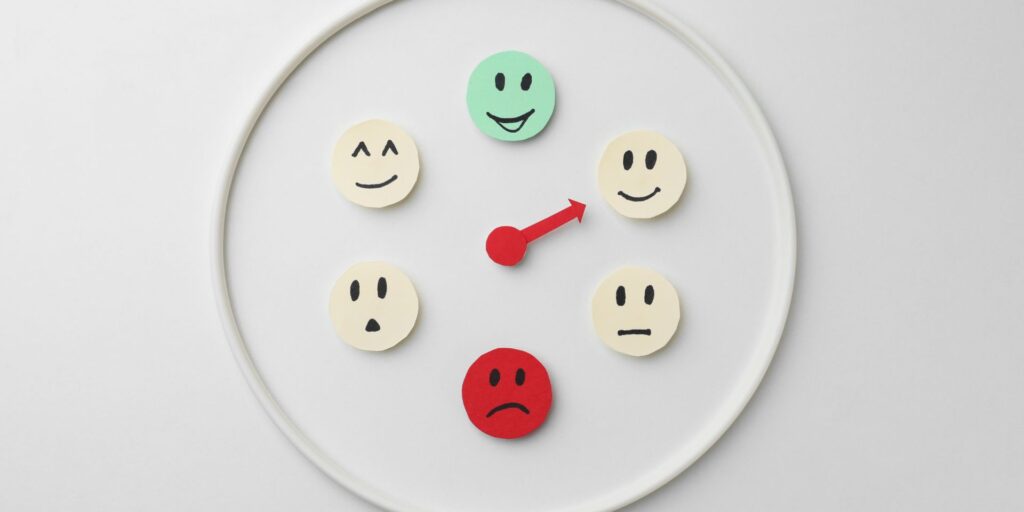
Mood monitoring — tracking energy, sleep, mood, and activity level over time — is one of the most clinically important tools for people with bipolar spectrum conditions. It creates a longitudinal record that makes the pattern visible and makes hypomania recognizable as a pattern rather than simply as a good period. Mood stabilizers reduce the amplitude of both poles — both the highs and the lows — and are the cornerstone of bipolar treatment. Diagnostic clarification that includes careful longitudinal assessment of mood patterns is essential for identifying bipolar spectrum presentations that might otherwise be missed or misdiagnosed as unipolar depression.
Frequently Asked Questions
Is hypomania always obvious?
No — hypomania can be subtle, particularly in people whose baseline is relatively low. The comparison point is the person’s own individual baseline, not some general standard. What looks like normal functioning from the outside may be hypomanic for someone whose usual baseline is lower. This is why longitudinal mood monitoring — tracking over time — is more informative than any single assessment.
Can I be hypomanic without knowing it?
Yes — this is extremely common. Hypomania feels good, and people rarely think of feeling good as a symptom that requires clinical attention. The people around the person are sometimes more aware of the hypomanic episode than the person themselves. Family or partner observations about mood changes are clinically important information.
How long does a hypomanic episode last?
By definition, a hypomanic episode must last at least four days to meet diagnostic criteria — but in practice, hypomanic episodes can last from a few days to several months. The duration and frequency of episodes varies significantly between individuals and over the course of the illness.
Does treating hypomania mean never feeling energetic or productive again?
No — this is one of the most common and most important concerns to address. Effective treatment for bipolar disorder does not flatten mood into a uniformly neutral state. It reduces the amplitude of the cycles — making the highs less extreme and the lows less devastating — while still allowing a full and variable range of emotional experience. Many people find that mood stability enables more consistent productivity than the boom-and-bust pattern that preceded treatment.
If you have recognized periods in your history that sound like what is described here — feeling unusually capable, needing less sleep, starting more projects than you finished — those periods are worth discussing in a clinical evaluation.
The science: how we checked this
Sources
- National Institute of Mental Health: Bipolar Disorder
- Merck Manual Professional Version: Bipolar Disorders
How we checked this
- Symptoms of mania (less need for sleep, racing thoughts, talking fast, more pleasurable activities), hypomania being milder, feeling good and productive, family and friends noticing, people seeking help only for depression, antidepressants alone triggering mania or rapid cycling, and keeping a mood journal: NIMH, Bipolar Disorder.
- Hypomania lasting at least 4 days, not involving marked impairment or hospital care, and often going unreported unless people are asked directly: Merck Manual.
- The "good stretch" column sums up this article's own explanation of comparing with your usual self.
- Not stopping a medication suddenly: our own tapering wording.
- Written in our own words from the sources above.
Live in New Jersey? Start your intake packet.


