Quick answer
Sleep and mental health affect each other in both directions. Insomnia is common with depression and anxiety, and people with insomnia are more likely to develop depression later. Sleep apnea, where breathing keeps stopping during sleep, can leave you exhausted and, if untreated, can contribute to anxiety and depression. For chronic insomnia, cognitive behavioral therapy for insomnia (CBT-I) is the recommended first treatment, so it's worth telling your provider exactly how you're sleeping.
Key takeaways
- Sleep problems and mental health conditions make each other worse, so breaking the cycle is an important part of treatment.
- Anxiety often makes it hard to fall asleep, while depression is linked to early morning waking or sleeping too much.
- Sleep apnea is often missed and can contribute to anxiety and depression, so a sleep study may be worth discussing.
- CBT for insomnia is the first-line treatment for chronic insomnia and outperforms sleep medication over the long term.
Sleep disorders are far more common than most people realize — and their relationship to mental health is bidirectional and significant. Sleep problems make mental health conditions worse. Mental health conditions make sleep problems worse. Breaking this cycle is often one of the most important — and most neglected — parts of psychiatric treatment.
How Common Sleep Problems Actually Are
Insomnia — difficulty falling asleep, staying asleep, or waking too early with inability to return to sleep — is the most prevalent sleep disorder, affecting a substantial portion of the adult population at any given time. The CDC estimates that more than one-third of American adults regularly do not get sufficient sleep, and that chronic insomnia disorder — insomnia persisting for at least three months and producing significant daytime impairment — is common among adults. When it is chronic, insomnia is both a mental health concern in its own right and a significant aggravating factor for depression and anxiety.
Sleep apnea — a condition in which breathing repeatedly stops and starts during sleep, usually due to airway obstruction — produces fragmented, non-restorative sleep regardless of how many hours are spent in bed. Many people with sleep apnea do not know they have it. As MedlinePlus notes, untreated sleep apnea can contribute to anxiety and depression, and in most cases treatment relieves its symptoms.
Myth or fact? Sleep and mental health
Choose an answer for each to see the explanation. Nothing is saved.
1Poor sleep can raise the risk of depression.
Fact. A large review of long-term studies found that people with insomnia who weren't depressed had about twice the risk of developing depression later, compared with people without sleep problems.
2Once my depression is treated, my insomnia will always go away on its own.
Myth. Treating depression often helps sleep, but insomnia can continue after other conditions are treated. That's why sleep deserves its own attention in your treatment plan.
3Good sleep hygiene on its own is the best treatment for chronic insomnia.
Myth. Habits like a regular bedtime routine help, but sleep medicine guidelines don't recommend sleep hygiene as the only treatment for chronic insomnia. CBT-I, which includes steps like stimulus control and sleep restriction, is the recommended first treatment.
How Mental Health Conditions Affect Sleep
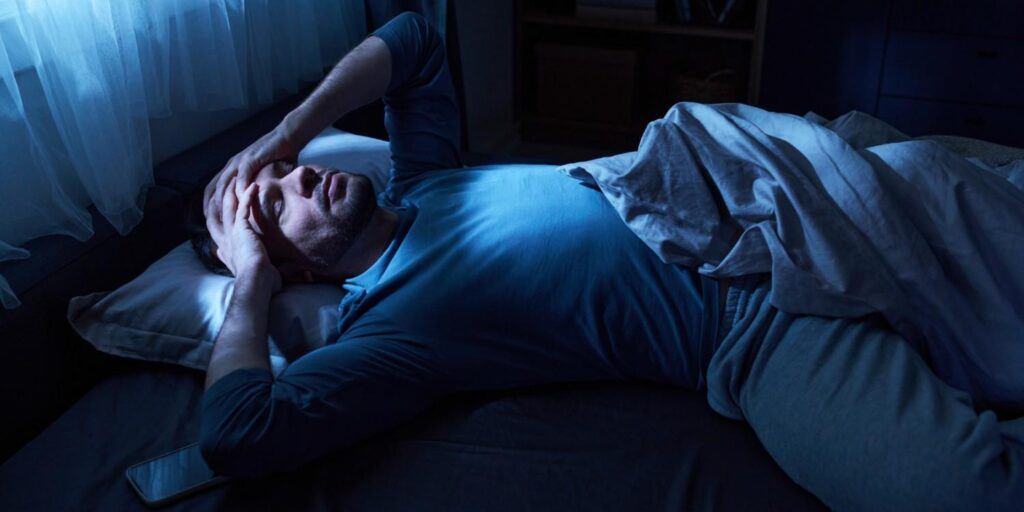
From the psychiatric side, the relationship between mental health conditions and sleep is well-established and runs in multiple directions. Anxiety — particularly generalized anxiety disorder — commonly produces difficulty falling asleep because the nervous system remains activated at bedtime. The mind that does not stop during the day does not stop when the lights go out. The result is prolonged sleep onset, lying awake with the thoughts that could not be attended to during the day, and a fatigue the following morning that compounds the anxiety of the next day.
Depression is closely associated with early morning waking — the experience of waking at two or three in the morning and being unable to return to sleep, often with a resurgence of rumination or low mood that is particularly difficult to manage in the quiet of early morning. Depression is also associated with hypersomnia in some presentations — sleeping more than usual and still feeling unrestored — which is less widely recognized but equally real. PTSD-related nightmares and hyperarousal directly disrupt sleep, creating a particular challenge in trauma treatment where sleep disruption and trauma symptoms maintain each other in a difficult cycle.
How Sleep Affects Mental Health
The effects of inadequate or disrupted sleep on mental health are extensive and well-documented. Sleep deprivation increases emotional reactivity, reduces the prefrontal cortex’s capacity to regulate emotional responses, worsens anxiety and mood, impairs cognitive function, and reduces the effectiveness of coping strategies.
Sleep is not a passive state. During sleep, the brain consolidates memories, processes emotional experiences, regulates neurochemistry, and clears metabolic waste. When sleep is disrupted or inadequate, all of these processes are impaired — with direct effects on mood, anxiety, and cognitive function the following day.
Your sleep
Sleep notes to bring to your provider
Tick what applies to you, then copy your list. Nothing is saved or sent.
Why Sleep Deserves Explicit Attention in Treatment

The clinical implication is straightforward: effective psychiatric treatment that does not explicitly address sleep is likely to produce more limited results. Sleep is not a peripheral concern — it is a central one.
Cognitive behavioral therapy for insomnia — CBT-I — is the first-line treatment for chronic insomnia and has strong evidence for effectiveness even in the context of psychiatric comorbidities. It outperforms sleep medication long-term and does not carry the dependence risks that many sleep medications do.
Frequently Asked Questions
How does poor sleep affect mental health?
Sleep deprivation increases emotional reactivity, reduces the brain’s capacity to regulate emotions, worsens anxiety and depression symptoms, impairs cognitive function, and reduces the effectiveness of coping strategies. The relationship is bidirectional — poor sleep worsens mental health, and mental health conditions worsen sleep.
Can depression cause insomnia?
Yes — sleep disruption is one of the most consistent features of depression. Both insomnia (difficulty falling asleep or early morning waking) and hypersomnia (sleeping too much) occur in depression, depending on the presentation. Early morning waking — waking at 3 or 4 AM and being unable to return to sleep — is particularly associated with depression.
What is CBT-I and does it work?
CBT-I — cognitive behavioral therapy for insomnia — is a structured psychological treatment that addresses the thoughts and behaviors that maintain chronic insomnia. It includes sleep restriction, stimulus control, and cognitive restructuring of unhelpful sleep beliefs. Research suggests CBT-I works better than sleep medication over the long term, and its effects may last longer.
Should I get a sleep study if I have anxiety or depression?
Sleep apnea is significantly underdiagnosed, and its symptoms — fatigue, mood difficulties, cognitive impairment — overlap substantially with anxiety and depression. If you experience significant daytime fatigue despite adequate sleep time, snore, or have been told you stop breathing during sleep, a sleep study is worth discussing with your provider. Untreated sleep apnea can significantly limit the effectiveness of psychiatric treatment.
If sleep has been a consistent problem — difficulty falling asleep, staying asleep, or waking too early — that problem deserves direct attention in your mental health treatment, not just as a symptom to manage but as a condition to address.
The science: how we checked this
Sources
- Baglioni C, et al. Insomnia as a predictor of depression: a meta-analytic evaluation of longitudinal epidemiological studies. Journal of Affective Disorders, 2011
- Merck Manual Consumer Version: Insomnia and Excessive Daytime Sleepiness (EDS)
- MedlinePlus: Obstructive sleep apnea in adults
- Qaseem A, et al. Management of Chronic Insomnia Disorder in Adults: A Clinical Practice Guideline From the American College of Physicians. Annals of Internal Medicine, 2016
- Edinger JD, et al. Behavioral and psychological treatments for chronic insomnia disorder in adults: an American Academy of Sleep Medicine clinical practice guideline. Journal of Clinical Sleep Medicine, 2021
- Mitchell MD, et al. Comparative effectiveness of cognitive behavioral therapy for insomnia: a systematic review. BMC Family Practice, 2012
How we checked this
- Insomnia roughly doubling the risk of later depression: Baglioni et al., Journal of Affective Disorders (2011).
- Depression, anxiety and substance use as common causes of insomnia, treating depression often relieving insomnia, a regular bedtime routine, evening alcohol causing early waking, and caffeine, sleep aids and other drugs affecting sleep: Merck Manual.
- Insomnia continuing after other conditions are treated: Mitchell et al., BMC Family Practice (2012).
- Loud snoring, gasping and pauses in breathing as signs of sleep apnea, and untreated sleep apnea contributing to anxiety and depression: MedlinePlus.
- CBT-I as the first treatment for chronic insomnia: American College of Physicians guideline. Stimulus control and sleep restriction as recommended parts of treatment, and sleep hygiene not recommended on its own: American Academy of Sleep Medicine guideline.
- The sleep notes list sums up the sleep problems this article describes.
- Written in our own words from the sources above.


