
Quick answer
OCD sits at the center of a family of related conditions that includes body dysmorphic disorder (BDD), hoarding disorder, and body-focused repetitive behaviors such as hair pulling and skin picking. They share a pattern of repeated thoughts or behaviors that are hard to stop, but what drives them differs, and so does the therapy that helps most: exposure and response prevention (ERP) for OCD, therapy focused on hoarding for hoarding disorder, and habit reversal training for hair pulling and skin picking. That's why an accurate diagnosis matters. At ANK, we treat OCD with medication and refer you for ERP when you need it.
Key takeaways
- OCD sits at the center of a broader spectrum of related conditions that share repetitive thoughts and behaviors.
- Body dysmorphic disorder, hoarding disorder, hair pulling and skin picking are related to OCD but differ in what drives them.
- Treatment is condition-specific, so the approach that helps OCD isn't always the right one for related conditions.
- Accurate diagnosis is the starting point for finding treatment that fits your specific condition.
OCD is classified in the DSM-5 under a category called Obsessive-Compulsive and Related Disorders — a grouping that recognizes OCD as the anchor condition of a broader spectrum of related presentations. Understanding what this spectrum includes, what these conditions share, and how they differ matters for accurate diagnosis and for finding treatment that addresses the specific condition rather than treating all of them the same way.
What the OCD Spectrum Conditions Share
The conditions in the OCD spectrum share a core structural feature: repetitive thoughts or preoccupations that drive repetitive behaviors or mental acts, creating a self-sustaining cycle that causes significant distress and functional impairment. The NIMH describes OCD as uncontrollable, recurring thoughts (obsessions), repetitive behaviors (compulsions), or both; OCD and its related conditions are grouped together because they share this pattern of repetitive thoughts and behaviors. Many respond to behavioral therapy that targets the repetitive cycle, and some also respond to SSRIs — though the specific behavioral approach varies by condition.
Myth or fact? BDD and hoarding
Choose an answer for each to see the explanation. Nothing is saved.
1Body dysmorphic disorder is really just vanity.
Myth. In BDD, the worry about a flaw others can't see, or think is minor, takes up hours of the day and causes real distress or gets in the way of work, school or relationships. That's what sets it apart from ordinary concern about how you look.
2For someone with BDD, cosmetic treatment usually fixes the worry.
Myth. Cosmetic treatment is almost always ineffective for BDD and can make the preoccupation stronger. Treatment that helps includes cognitive behavioral therapy focused on BDD and certain antidepressants (SSRIs).
3Hoarding disorder is different from collecting or being messy.
Fact. In hoarding disorder, parting with things causes real distress, possessions pile up in a disorganized way, and living spaces get so cluttered they can't be used for their purpose. Collecting is usually organized and doesn't take over the home.
Body Dysmorphic Disorder (BDD)

BDD involves preoccupation with a perceived physical flaw that others cannot see or consider minor. People with BDD spend significant time each day examining, comparing, concealing, or seeking reassurance about the perceived defect. The distress is genuine and significant — and the cycle (preoccupation → compulsive checking or concealing → temporary relief → return of preoccupation) mirrors the OCD cycle structurally. BDD responds to ERP targeting the checking and avoidance behaviors, and to SSRIs.
Hoarding Disorder
Hoarding disorder involves persistent difficulty discarding possessions, leading to accumulation that congests living spaces and interferes with their intended use. Hoarding is distinct from OCD in its motivation — it is not typically driven by obsessional doubt but by difficulty with decision-making, emotional attachment to possessions, and distress associated with discarding. Treatment involves a specific behavioral approach rather than standard ERP.
Is it this or that?
OCD, hoarding, or hair pulling and skin picking?
| OCD | Hoarding disorder | Hair pulling or skin picking | |
|---|---|---|---|
| What drives it | Unwanted thoughts, images or urges (obsessions) that keep coming back and cause anxiety. | A strong need to save things, and real distress at the thought of parting with them. | Often a feeling of tension before the behavior and relief after it. For some people it happens almost automatically. |
| What it looks like | Repeated actions or mental acts (compulsions), like checking or counting, done to ease the anxiety. | Difficulty discarding, so clutter fills living spaces until they can't be used. | Pulling out hair or picking at skin again and again, despite trying to stop. |
| Main therapy | Exposure and response prevention (ERP), a type of cognitive behavioral therapy (CBT). | CBT focused on hoarding: practice discarding, making decisions, and cutting back on acquiring. | Habit reversal training, a type of CBT that teaches you to notice triggers and use a different action instead. |
| Medication | Certain antidepressants (SSRIs) are a main treatment. | May help some people, especially when another mental health condition is also present. | Some medications can help, but the evidence is more limited. |
OCD
- What drives it
- Unwanted thoughts, images or urges (obsessions) that keep coming back and cause anxiety.
- What it looks like
- Repeated actions or mental acts (compulsions), like checking or counting, done to ease the anxiety.
- Main therapy
- Exposure and response prevention (ERP), a type of cognitive behavioral therapy (CBT).
- Medication
- Certain antidepressants (SSRIs) are a main treatment.
Hoarding disorder
- What drives it
- A strong need to save things, and real distress at the thought of parting with them.
- What it looks like
- Difficulty discarding, so clutter fills living spaces until they can't be used.
- Main therapy
- CBT focused on hoarding: practice discarding, making decisions, and cutting back on acquiring.
- Medication
- May help some people, especially when another mental health condition is also present.
Hair pulling or skin picking
- What drives it
- Often a feeling of tension before the behavior and relief after it. For some people it happens almost automatically.
- What it looks like
- Pulling out hair or picking at skin again and again, despite trying to stop.
- Main therapy
- Habit reversal training, a type of CBT that teaches you to notice triggers and use a different action instead.
- Medication
- Some medications can help, but the evidence is more limited.
General information, not a diagnosis. BDD, described above, is treated with CBT focused on BDD and SSRIs, much like OCD. Summarized from the Merck Manual.
Body-Focused Repetitive Behaviors (BFRBs)
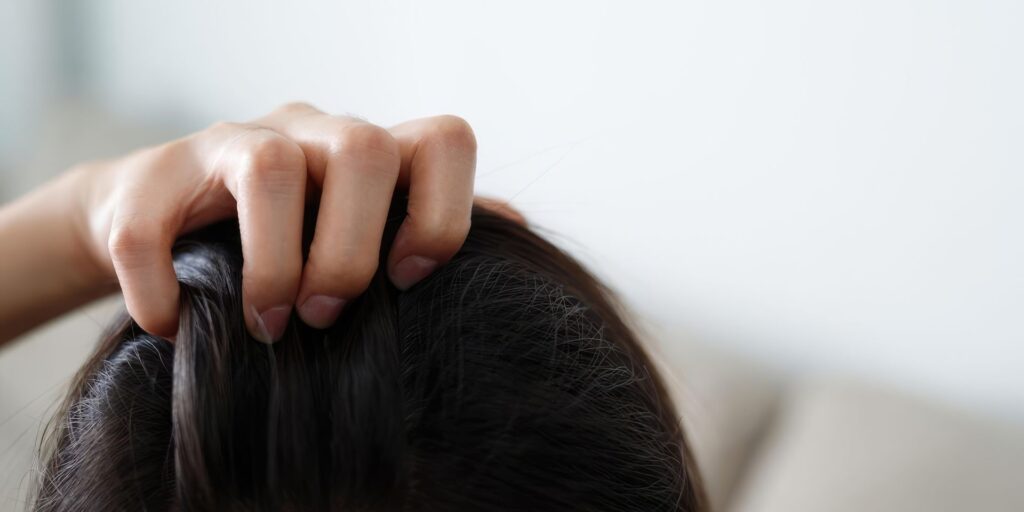
BFRBs include trichotillomania (hair pulling) and excoriation disorder (skin picking) — conditions characterized by repetitive, often automatic body-focused behaviors that the person feels compelled to perform despite wanting to stop. They are driven not primarily by obsessional thought but by sensory experiences and automatic behavioral patterns. Treatment — particularly habit reversal training — is specific to BFRBs and different from ERP.
Why Accurate Diagnosis Matters
The OCD spectrum conditions are frequently misidentified — sometimes as anxiety disorders, sometimes as personality traits, sometimes as simple vanity or messiness. Accurate diagnostic clarification matters because treatment approaches are condition-specific: ERP for OCD, habit reversal training for body-focused repetitive behaviors, specific adaptations for BDD and hoarding. And OCD treatment with a provider who understands the full spectrum — rather than defaulting to generic anxiety treatment — means you’re more likely to get the treatment that fits your condition.
Frequently Asked Questions
Is hoarding disorder the same as OCD?
They are related but distinct. Hoarding disorder can co-occur with OCD but has different underlying mechanisms and responds to a different treatment approach. The accumulation in hoarding is driven by difficulty discarding and emotional attachment rather than by obsessional doubt, and treatment specifically targets decision-making and the distress associated with discarding rather than exposure and response prevention.
What is body dysmorphic disorder?
BDD is a condition characterized by preoccupation with a perceived physical defect that others cannot see or consider minor. The preoccupation drives repetitive behaviors — mirror-checking, camouflaging, seeking reassurance, avoiding situations where the flaw might be noticed — that sustain the cycle. BDD responds to ERP targeting the checking and avoidance behaviors, and to SSRIs, much like OCD.
Is hair pulling a form of OCD?
Trichotillomania is classified on the OCD spectrum and shares the feature of repetitive behavior that the person wants to stop but feels compelled to continue. However, it is driven primarily by sensory experiences and automatic behavior patterns rather than obsessional thought, and it responds better to habit reversal training and comprehensive behavioral treatment than to standard OCD treatment.
How do I know which OCD spectrum condition I have?
A thorough diagnostic evaluation with a provider who knows the OCD spectrum is the appropriate way to clarify the specific condition. The conditions share surface features but have meaningful differences that affect what treatment approach is most likely to work. Getting the specific diagnosis right matters for getting the specific treatment right.
If you have recognized yourself in any of the conditions described here — whether it is OCD, BDD, a body-focused repetitive behavior, or something else on this spectrum — accurate diagnosis is the starting point for effective treatment.
The science: how we checked this
Sources
- Merck Manual: Obsessive-Compulsive Disorder (OCD)
- Merck Manual: Body Dysmorphic Disorder (BDD)
- Merck Manual: Hoarding Disorder
- Merck Manual: Hair-Pulling Disorder (Trichotillomania)
- Merck Manual: Skin-Picking (Excoriation) Disorder
How we checked this
- Written in our own words from the sources above.
- OCD, obsessions, compulsions, ERP and SSRIs: Merck Manual, OCD.
- BDD versus vanity, cosmetic treatment, CBT focused on BDD and SSRIs: Merck Manual, BDD.
- Hoarding versus collecting, CBT focused on hoarding, and when medication may help: Merck Manual, Hoarding Disorder.
- Tension and relief, automatic pulling or picking, habit reversal training and the more limited medication evidence: Merck Manual, Hair-Pulling Disorder and Skin-Picking Disorder.
- Treating OCD with medication and referring for ERP is ANK's own approach.


