Quick answer
If your body doesn't settle easily, trying harder to relax usually backfires. Relaxation is a capacity you build with practice. Short, regular sessions tend to help more than occasional long ones. Slow breathing with a longer out-breath and progressive muscle relaxation are simple places to start. If anxiety or past trauma makes relaxing feel hard, or a practice makes you feel worse, go gently and consider talking with a provider.
Key takeaways
- Relaxation is a capacity you build with practice, not a state you force yourself into.
- Short, frequent rest periods tend to help more than occasional long ones.
- Slow breathing with a longer out-breath and progressive muscle relaxation both help shift the nervous system toward rest.
- If anxiety or trauma makes relaxing especially hard, treating the underlying pattern can make these practices easier.
If relaxation does not come naturally — if your body does not know how to settle when you have the time — the answer is not to try harder to relax. It is to practice the conditions that allow relaxation to occur. These are learnable. The nervous system can be trained toward greater capacity for rest, though the training works differently than most people expect.
This reframe matters. Most people who struggle with relaxation have been trying to achieve a state rather than building a capacity. Building a capacity takes consistent practice, modest expectations, and a particular approach to what rest actually looks like.
Why Small and Frequent Works Better Than Infrequent and Long
For a nervous system that has been stuck in higher activation, short and frequent rest periods tend to be more effective than occasional long ones. Even five to ten minutes of deliberate, low-stimulation rest — without a screen, without background noise, with slow breathing — provides the nervous system with a useful dose of what it has been missing. The goal is not depth of relaxation in any single session. It is consistency across many sessions. The NIMH notes that breathing exercises give the most benefit when done regularly, as part of your daily routine — and the same principle applies to rebuilding the capacity for rest.
Myth or fact? Learning to relax
Choose an answer for each to see the explanation. Nothing is saved.
1If you don't feel deeply relaxed during a practice session, it isn't working.
Myth. The goal isn't depth of relaxation in any single session. It's consistency across many sessions, which gradually builds your body's familiarity with rest.
2Slowing your breathing can shift your body toward a calmer state.
Fact. Relaxation techniques aim for the body's relaxation response: slower breathing, lower blood pressure and a slower heart rate. A research review found that slow breathing in healthy adults was linked to changes in heart rate variability and to feeling more relaxed and less anxious.
3Relaxation exercises feel calming for everyone.
Myth. They're generally considered safe, but some people occasionally feel more anxious, have intrusive thoughts or fear losing control. There are rare reports of symptoms getting worse in people with certain psychiatric conditions or a history of trauma. If a practice feels bad, try a different one or talk with a provider.
Slow, Diaphragmatic Breathing
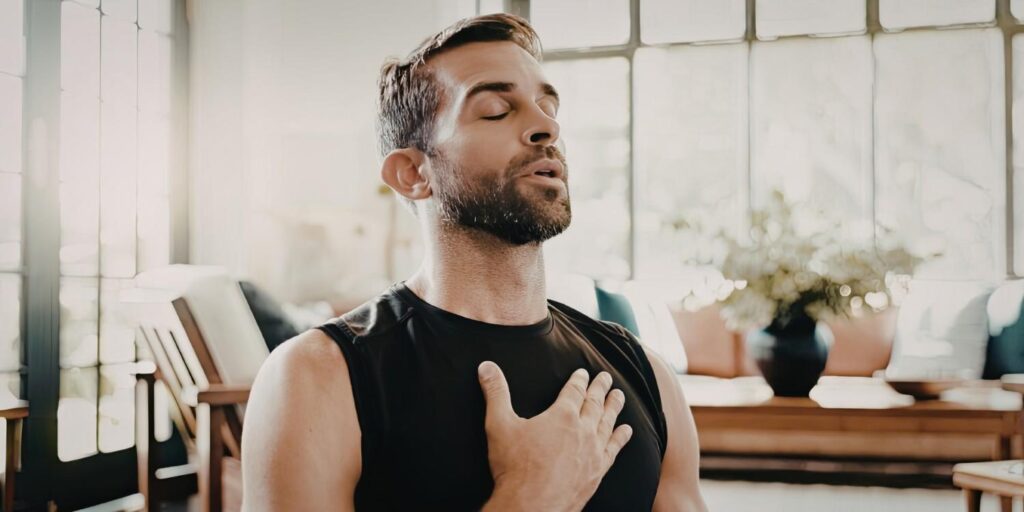
Of all the tools available for shifting nervous system state, slow diaphragmatic breathing is probably the most accessible and the most directly effective. It works through a specific mechanism: slow breathing, particularly with a longer out-breath than in-breath, activates the parasympathetic nervous system — the recovery mode — through vagal pathways.
Research available through the National Institutes of Health has found that slow breathing (under about ten breaths per minute) is linked to measurable shifts in heart rate variability and nervous system activity in healthy adults. A simple starting practice is to inhale for four counts, exhale for six to eight. Even a few minutes of this can produce a noticeable shift — not dramatic, but real. Over time, repeated practice builds the nervous system’s familiarity with that shifted state and makes it more accessible.
Progressive Muscle Relaxation
Progressive muscle relaxation is a well-researched technique that works through a different but complementary mechanism: deliberately tensing muscle groups and then releasing them, moving systematically through the body. The deliberate release after tension provides a contrast that helps the nervous system register and deepen the shift toward rest.
A complete progressive muscle relaxation sequence typically takes fifteen to twenty minutes and has consistent evidence for reducing both physiological and psychological indicators of anxiety. It works best when practiced regularly — daily, ideally — rather than only during acute distress.
Practice plan
My relaxation practice plan
Tick the steps you want to try, then copy your plan. Nothing is saved or sent.
Creating the Right Conditions
Relaxation practice is more effective when the conditions support it. This means reducing sensory input: dim lighting, reduced background noise, a comfortable temperature. It means removing the phone from the immediate environment during practice periods. And it means approaching the practice with modest expectations — not trying to reach a particular state, but simply allowing whatever settling occurs.
For people managing significant anxiety disorders or trauma responses, the difficulty relaxing may be more entrenched and may benefit from the kind of structured support that integrated psychotherapy within psychiatric care can provide. When relaxation difficulty is part of a larger pattern, addressing the pattern directly tends to make the relaxation practices more accessible and more effective. A comprehensive psychiatric evaluation can help clarify whether this is the case.
Consistency Over Duration
The single most important principle for teaching the body to relax is this: consistency matters more than duration. Five minutes practiced daily, as part of your routine, tends to help more than an occasional long session. The goal is not a dramatic relaxation experience. It is the gradual recalibration of a nervous system toward greater capacity for rest.
Frequently Asked Questions
What is diaphragmatic breathing and how does it help anxiety?
Diaphragmatic breathing engages the lower lungs rather than the chest, naturally producing slower and deeper breaths. This activates the vagus nerve and the parasympathetic nervous system — the recovery mode — which directly counteracts the sympathetic activation that anxiety produces. It is one of the most directly physiological interventions available for acute anxiety management.
How long does it take to learn to relax if you have anxiety?
The capacity for genuine rest is rebuilt gradually through consistent practice rather than learned in a single session. Many people notice some improvement with consistent daily practice, and the change builds gradually. Treating underlying anxiety can make these practices easier to use.
What is progressive muscle relaxation?
Progressive muscle relaxation is a technique that involves deliberately tensing muscle groups — feet, calves, thighs, abdomen, arms, face — and then deliberately releasing the tension, moving systematically through the body. The contrast between tension and release helps the nervous system register the difference and deepen into the released state. It has consistent research support for reducing anxiety.
Can you practice relaxation if you have trauma?
Yes, though it benefits from support and may need to be approached gradually. Some people with trauma histories find that certain relaxation practices — particularly body-focused ones — can initially increase rather than decrease distress. Working with a trauma-informed clinician to find practices that feel safe is the recommended approach.
If your body does not know how to settle — if rest feels effortful rather than natural, or if you have been told to relax without anyone explaining how — these are learnable skills, not states you either have or don’t.
The science: how we checked this
Sources
- National Center for Complementary and Integrative Health (NIH): Relaxation Techniques: What You Need To Know
- Zaccaro A, et al. How breath-control can change your life: a systematic review on psycho-physiological correlates of slow breathing. Frontiers in Human Neuroscience, 2018
- NHS: Breathing exercises for stress
How we checked this
- Written in our own words from the sources above.
- The relaxation response, progressive muscle relaxation, and possible negative experiences with relaxation techniques (including in people with a history of trauma): NCCIH.
- Slow breathing and heart rate variability, relaxation and anxiety in healthy adults: Zaccaro et al. (2018).
- Breathing exercises working best when done regularly, as part of a daily routine: NHS.
- The first myth-or-fact answer and the practice plan sum up this article's own advice.
Live in New Jersey? Start your intake packet.

Clinically reviewed by
Alyssa Killion, MSN, APN, PMHNP-BC
Board-certified psychiatric mental health nurse practitioner and founder of ANK Behavioral Health, providing telehealth psychiatric care to adults across New Jersey.
Written by ANK Behavioral Health. Reviewed on October 27, 2026.


