Quick answer
Postpartum anxiety is worry after having a baby that won't switch off: racing thoughts, trouble sleeping even when the baby sleeps, a constant sense that something bad is about to happen, and physical tension. It's common, it often happens without postpartum depression, and screening for depression alone can miss it. Some worry is a normal part of caring for a newborn; it becomes a concern when it doesn't settle when things are safe and starts affecting sleep or daily life. It's treatable, so talk with a provider before it feels unmanageable. Confusion, or seeing or hearing things others don't, needs urgent care: call 911 or go to the nearest emergency room.
Key takeaways
- Postpartum anxiety is common, often occurs without depression, and gets far less attention than postpartum depression.
- It often looks like constant worry, racing thoughts while the baby sleeps, a sense of dread and trouble relaxing, rather than sadness.
- Worry that won't settle even when things are safe, and that affects sleep or daily life, is more than normal new parent concern.
- Postpartum anxiety is treatable, and reaching out early means you're taking something real seriously.
When people talk about postpartum mental health, the conversation almost always centers on depression. Postpartum depression is real, it is serious, and awareness of it has grown meaningfully over the past two decades. But there is another postpartum condition that is at least as common, frequently more distressing in the early weeks, and consistently underrecognized — and that is postpartum anxiety.
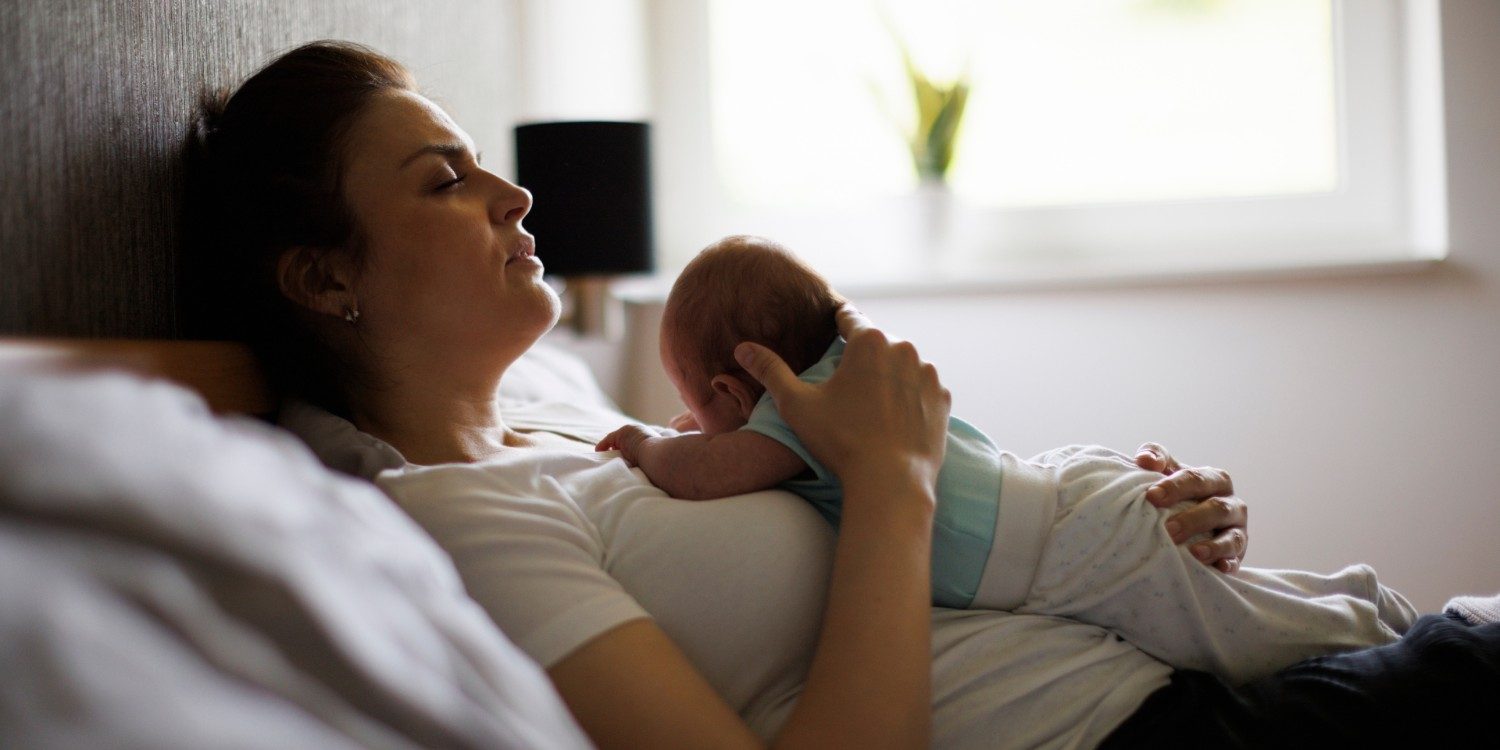
Many new parents who are struggling with postpartum anxiety do not identify what they are experiencing as a mental health concern at all. They are not sad. They are not having difficulty bonding. They are doing everything they are supposed to do for their baby. They are just — terrified. Exhausted by a mind that will not stop running. Unable to rest even when they have the opportunity. Convinced, in a way that will not fully let go, that something is about to go wrong.
That experience has a name. It is common. It is treatable. And it deserves the same attention that postpartum depression receives.
How Common Postpartum Anxiety Actually Is
Estimates of postpartum anxiety prevalence vary across studies depending on how anxiety is defined and measured. Research suggests that clinically significant postpartum anxiety affects roughly 10 to 15 percent of new mothers, with some studies reporting higher rates depending on the population and measurement tool. A recent Lancet Psychiatry review estimated a weighted global prevalence of approximately 12 percent. What is consistent across studies is that postpartum anxiety is common — and that it rivals postpartum depression in prevalence while receiving significantly less attention.
What makes postpartum anxiety particularly significant is that it frequently occurs without postpartum depression — meaning it is not simply a feature of depression but a distinct presentation that warrants its own recognition and attention. Studies have found that the majority of postpartum women with clinically significant anxiety do not meet criteria for postpartum depression. When anxiety is only screened for as part of depression screening, these women are missed entirely.
Postpartum anxiety often emerges very early — sometimes within the first days and weeks after birth — and may precede the onset of postpartum depression in some women. However, the timing varies significantly between individuals, and both conditions can appear at any point in the first year. The early window, combined with the normalization of new parent worry, creates a period in which significant anxiety frequently goes unaddressed.
What Postpartum Anxiety Actually Looks Like

The picture of postpartum anxiety does not look like sadness. It looks like a nervous system that cannot come down — a persistent state of alert that was activated by the weight of responsibility for a new life and that cannot find its way back to rest.
Constant, hard-to-control worry. Not concern that passes when things are okay, but worry that finds new targets as old ones resolve. The baby is breathing — but is the breathing normal? The feeding went well — but was it enough? Something is always available to worry about, and the worry does not settle when the current concern is addressed. It moves to the next thing.
Racing thoughts at night, even when the baby is sleeping. This is one of the most common and most debilitating features of postpartum anxiety. The opportunity to sleep is present. The body is exhausted. But the mind is running — reviewing the day, anticipating tomorrow, preparing for scenarios that may never occur. The inability to sleep despite the opportunity is not laziness or poor sleep habits. It is a nervous system that has not received the signal that it is safe to rest.
A persistent sense that something bad is about to happen. A generalized dread that does not attach to anything specific — or attaches to everything. The feeling of waiting for the other shoe to drop. Of being on the edge of disaster without being able to name what the disaster is. This is a hallmark feature of anxiety in the postpartum period and one that is particularly distressing because it is so difficult to explain to anyone who is not experiencing it.
Difficulty relaxing or settling, even in moments of objective calm. The baby is asleep, the house is quiet, nothing is wrong — and yet the body is tense, the mind is busy, and the sense of ease that the situation warrants is simply not accessible. Postpartum anxiety does not respond to reassurance the way ordinary worry does. Being told that everything is fine does not make it feel fine.
Irritability and emotional reactivity. Because the nervous system is chronically activated, the threshold for frustration is lower. Small things feel large. The combination of sleep deprivation and ongoing anxiety produces a level of emotional reactivity that can feel foreign and frightening, and that can generate guilt — which then feeds the anxiety further.
Physical symptoms. Heart racing. Chest tightness. Difficulty taking a full breath. Muscle tension that does not release. These physical manifestations of anxiety are common in the postpartum period and frequently lead new parents to wonder if something is physically wrong with them — which can itself become a new source of worry.
Myth or fact? Postpartum anxiety
Choose an answer for each to see the explanation. Nothing is saved.
1Postpartum anxiety is rare.
Myth. A 2025 research review estimated that 12.3% of new mothers worldwide have postpartum anxiety. It's common, even though it gets far less attention than postpartum depression.
2If I'm not depressed, my anxiety can't be a postpartum condition.
Myth. Postpartum anxiety often happens on its own. In one large U.S. survey, only about a third of mothers with postpartum anxiety symptoms also reported symptoms of depression.
3Unwanted thoughts about something bad happening to the baby are common after birth.
Fact. Most new parents have unwanted thoughts about the baby being harmed, and for most they fade by about 6 months. They can still be very upsetting, so tell your provider if they're taking up a lot of time or getting in the way of daily life. If thoughts of harm don't feel unwanted, or come with confusion or seeing or hearing things others don't, call 911 or go to the nearest emergency room.
Why Postpartum Anxiety Is So Easy to Miss

Several features of the postpartum context make postpartum anxiety genuinely easy to miss — both by the person experiencing it and by the clinicians who see them in the early weeks.
New parenthood genuinely involves heightened vigilance. Some degree of concern about a newborn is not only normal but adaptive. A new parent who is not paying close attention, who does not startle when the baby cries, who is not attuned to subtle changes in the infant’s behavior — that would be concerning. The hypervigilance of early parenthood is, to some degree, the appropriate response to genuine responsibility for a completely dependent new life. This makes it genuinely difficult to know where normal parental concern ends and clinical anxiety begins.
The distinction is not in the content of the worry but in its controllability, its persistence, and its impact. Worry that settles when the situation is safe, that does not prevent sleep when sleep is available, that does not generate ongoing physical tension and distress — that is within the range of normal new parent concern. Worry that runs continuously regardless of circumstances, that cannot be turned off even in moments of objective safety, that is significantly affecting sleep and daily functioning — that is postpartum anxiety.
It does not look like the mental health emergency people expect. Postpartum anxiety does not announce itself as an illness. The person is functioning — caring for the baby, managing the household, showing up. They are not visibly falling apart. And the anxiety itself, from the inside, often feels like excessive conscientiousness rather than a clinical problem. “I’m just a worrier.” “I just care a lot.” “This is just what being a parent is like.” These explanations delay recognition — sometimes for months.
Postpartum screening tools are primarily designed to detect depression. The Edinburgh Postnatal Depression Scale, the most widely used postpartum screening tool, does not comprehensively assess anxiety symptoms. Research has found that the scale correlates only moderately with anxiety criteria, and providers who rely exclusively on this tool for postpartum mental health screening will identify depression but may miss anxiety entirely. A new parent who does not score above the threshold for depression may leave the appointment without anyone having assessed what is actually causing their distress.
New parents are unlikely to spontaneously report anxiety to their provider. Between the frequency of appointments in the early weeks, the focus on the baby’s health, and the internalized belief that some degree of worry is expected, many new parents experiencing significant anxiety do not bring it up in medical appointments — either because they have normalized it or because they do not want to appear incapable. The burden of identification falls on providers who are not always asking.
Is it this or that?
Normal new-parent worry, or postpartum anxiety?
| Normal new-parent worry | Postpartum anxiety | |
|---|---|---|
| When things are safe | The worry settles once the concern is dealt with. | The worry moves on to the next thing and doesn't settle, even when nothing is wrong. |
| Sleep | You can sleep when you get the chance. | Your mind races, so you can't sleep even when the baby is asleep. |
| Your body | You can relax in calm moments. | Tension, a racing heart or tight chest that doesn't let up. |
| Daily life | You stay alert to your baby, which is part of caring for a newborn. | The worry is clearly affecting your sleep and how you get through the day. |
Normal new-parent worry
- When things are safe
- The worry settles once the concern is dealt with.
- Sleep
- You can sleep when you get the chance.
- Your body
- You can relax in calm moments.
- Daily life
- You stay alert to your baby, which is part of caring for a newborn.
Postpartum anxiety
- When things are safe
- The worry moves on to the next thing and doesn't settle, even when nothing is wrong.
- Sleep
- Your mind races, so you can't sleep even when the baby is asleep.
- Your body
- Tension, a racing heart or tight chest that doesn't let up.
- Daily life
- The worry is clearly affecting your sleep and how you get through the day.
General information, not a diagnosis. The difference is not what you worry about, but how much you can control it, how long it lasts and how much it affects you. If the right-hand column sounds familiar, talk with a provider.
Other Postpartum Anxiety Presentations Worth Knowing

In addition to generalized anxiety, the postpartum period is associated with several more specific anxiety presentations that are worth naming — because they are common, they are distinctive, and they are often not recognized as postpartum anxiety by the people experiencing them.
Postpartum OCD — characterized by intrusive, unwanted thoughts about harm coming to the baby, often experienced as deeply distressing and completely contrary to the parent’s wishes and values. These thoughts are not impulses, intentions, or desires. They are intrusive — arriving against the person’s will and producing significant anxiety and distress precisely because they are so contrary to how the parent feels about their child. Research has found that intrusive thoughts about infant harm are actually quite common in the postpartum period, occurring across a wide range of new parents including those without any psychiatric disorder. The guilt and shame generated by these thoughts frequently prevent people from disclosing them. They respond well to appropriate treatment — and recognizing them as anxiety rather than dangerous impulses is the first essential step.
Postpartum panic disorder — characterized by sudden, intense episodes of physical anxiety symptoms including heart racing, chest tightness, difficulty breathing, and an overwhelming sense of dread or impending doom. Panic attacks in the postpartum period are frequently misidentified as medical emergencies or attributed to physical causes, delaying the recognition that what is happening is a panic disorder that responds well to treatment.
Postpartum-specific fears and anxiety presentations — including intense fear of situations related to infant care, such as bathing the baby, being alone with the baby, or scenarios related to infant safety. These fears can significantly impair a parent’s ability to engage in routine caregiving and can be mistaken for inadequacy or disengagement rather than recognized as anxiety. They are a real and recognized feature of the postpartum anxiety landscape, even if they present differently from more familiar anxiety disorders.
When to Reach Out
The threshold for reaching out is not when things become unmanageable. By the time things feel unmanageable, the anxiety has typically been present for weeks or months without appropriate support. The appropriate threshold is earlier — when the worry is persistent, when it is affecting sleep or daily functioning, when it does not settle with reassurance or with the resolution of the concerns that triggered it.
Postpartum anxiety is treatable. Therapy — particularly cognitive behavioral therapy — has promising evidence for postpartum anxiety and directly targets the thought patterns and behavioral responses that maintain it. Medication can also be considered and, for nursing parents, there are options that are considered compatible with breastfeeding.
Getting support for postpartum anxiety is not evidence that you are failing as a parent. It is evidence that you are paying attention to something real, taking it seriously, and doing what is necessary to be well for your child and for yourself.
If you have been struggling with worry, racing thoughts, or a persistent sense of dread since your baby was born — and if rest has not brought relief and reassurance has not helped it settle — what you are experiencing may be postpartum anxiety, and it deserves direct attention. At ANK Behavioral Health, we provide postpartum mental health care via telehealth in New Jersey. You do not have to wait until things feel unmanageable. Reach out today.
Before your visit
What to tell your provider
Tick what applies to you, then copy your list to bring to your appointment. Nothing is saved or sent.
The science: how we checked this
Sources
- Feldman N, et al. Postpartum anxiety: a state-of-the-art review. Lancet Psychiatry, 2025
- Farr SL, et al. Postpartum anxiety and comorbid depression in a population-based sample of women. Journal of Women's Health, 2014
- Collardeau F, et al. Prevalence and course of unwanted, intrusive thoughts of infant-related harm. Journal of Clinical Psychiatry, 2024
- National Institute of Mental Health: Perinatal Depression
- NHS: Postpartum psychosis
How we checked this
- How common postpartum anxiety is (12.3% worldwide): Feldman and colleagues, Lancet Psychiatry (2025).
- Only about a third of mothers with postpartum anxiety symptoms also reporting depressive symptoms (35%): Farr and colleagues, a survey of 4,451 mothers in Illinois and Maryland (2014).
- Unwanted thoughts of the baby being harmed being common, and usually fading by 6 months: Collardeau and colleagues (2024).
- Postpartum psychosis symptoms and calling 911 or going to the nearest emergency room: NIMH and the NHS.
- The comparison table and the checklist sum up this article's own explanation.
- Written in our own words from the sources above.

Clinically reviewed by
Alyssa Killion, MSN, APN, PMHNP-BC
Board-certified psychiatric mental health nurse practitioner and founder of ANK Behavioral Health, providing telehealth psychiatric care to adults across New Jersey.
Written by ANK Behavioral Health. Reviewed on October 27, 2026.


