Quick answer
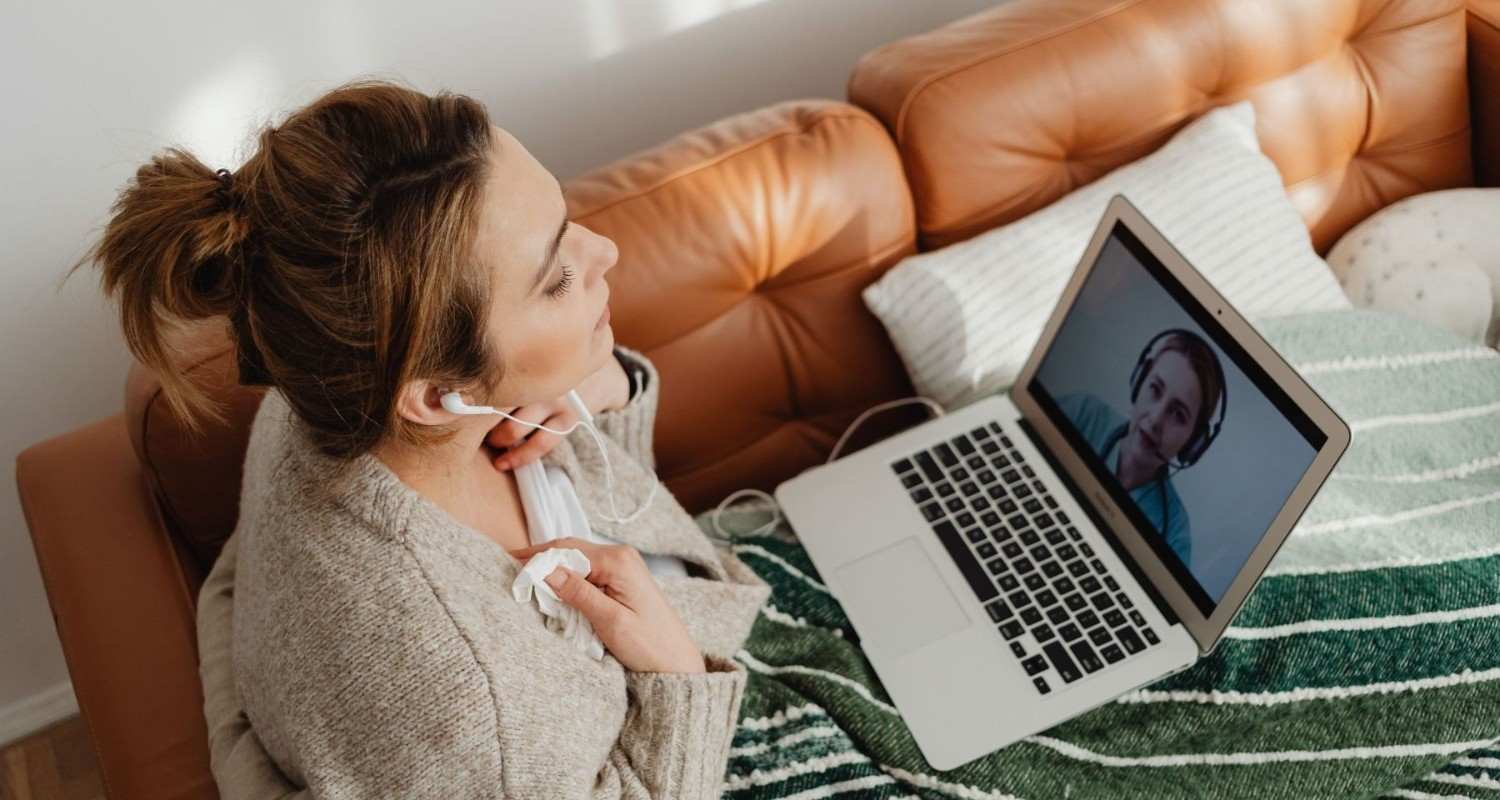
ANK Behavioral Health is based in Mount Laurel and sees adults by secure video across New Jersey. Telehealth changes the logistics (no travel, no waiting room, easier follow-ups) much more than the clinical work, which still rests on your history and a real conversation. You need to be physically in New Jersey for each visit, with a private space and a working camera. Most visits are by secure video, anywhere in New Jersey. Our office is in Mount Laurel, NJ, and in-person visits there are limited and by appointment only; ask our office.
Key takeaways
- Telehealth changes the logistics of psychiatric care considerably, while the clinical work itself stays the same.
- Removing travel makes it easier to keep follow-up appointments consistently, which matters in the early weeks of a medication change.
- You need to be physically in New Jersey for appointments with a New Jersey-licensed provider, along with a private space and a working camera.
- Seeing the same provider over time makes it possible to recognize patterns and adjust your plan as you respond.
ANK Behavioral Health is based in Mount Laurel, and our board-certified psychiatric nurse practitioners provide psychiatric care by telehealth to adults throughout New Jersey. For people searching for a psychiatrist in Mount Laurel NJ, the practical question is usually not whether telehealth works — the evidence on that is reasonably settled — but what it changes about getting and staying in care.
The honest answer is that it changes the logistics considerably and the clinical work very little. That distinction is worth understanding, because the logistics are frequently what determined whether previous attempts at care succeeded.
What Telehealth Actually Changes

It removes travel as a factor. An appointment stops requiring a two-hour block. For anyone managing a full workday, this is frequently the difference between attending follow-ups consistently and attending them sporadically.
It makes regular follow-up practical. In-person care creates pressure toward longer intervals, because each visit costs half a day. When the visit costs only the appointment length, keeping regular follow-ups after a medication change becomes reasonable rather than burdensome. This matters clinically — the early weeks of a medication trial are when many adjustment decisions get made.
It expands who you can see. Geographic proximity stops being the constraint. Someone in Burlington County is not limited to providers within a reasonable drive. If you live in Camden County, here’s what to know about finding a psychiatrist in Cherry Hill.
It removes the waiting room. For people with social anxiety, trauma histories, or simply a preference for privacy, this is not a minor consideration.
Is it this or that?
By secure video, or in person?
| By secure video | In person | |
|---|---|---|
| Getting there | No travel: you join from a private space anywhere in New Jersey. | Travel time on top of the appointment itself. |
| The evaluation | Built on your history and conversation; your provider can still observe how you're doing on camera. | Built on your history and conversation, face to face. |
| Lab work | Ordered through a laboratory or your primary care provider, with results sent to your prescriber. | Depends on the office; some send you to a laboratory too. |
| Physical exam | Not possible by video. If an exam is central to the question, in-person care is the better fit. | Possible when needed. |
By secure video
- Getting there
- No travel: you join from a private space anywhere in New Jersey.
- The evaluation
- Built on your history and conversation; your provider can still observe how you're doing on camera.
- Lab work
- Ordered through a laboratory or your primary care provider, with results sent to your prescriber.
- Physical exam
- Not possible by video. If an exam is central to the question, in-person care is the better fit.
In person
- Getting there
- Travel time on top of the appointment itself.
- The evaluation
- Built on your history and conversation, face to face.
- Lab work
- Depends on the office; some send you to a laboratory too.
- Physical exam
- Possible when needed.
A 2013 research review found telemental health effective for diagnosis and assessment and comparable to in-person care. MedlinePlus notes that some diagnoses need an in-person exam or a lab test.
What It Does Not Change
The clinical work is the same. Psychiatric evaluation is built on history and conversation, and neither requires physical presence. The questions asked, the reasoning applied, and the treatment options available are identical.
Appointment length is a practice decision, not a format decision. Telehealth does not inherently produce shorter or more rushed appointments — some telehealth practices offer longer appointments than nearby in-person practices, and some offer much shorter ones. This is worth checking directly rather than assuming.
The therapeutic relationship also translates more fully than most people expect. Concerns that video creates distance are common before starting and uncommon after.
The range of conditions treated is likewise unchanged. Depression, anxiety disorders, bipolar disorder, OCD, PTSD, perinatal mood conditions, and complex presentations requiring careful medication management are all handled through telehealth in routine outpatient practice. What determines whether telehealth is appropriate is acuity and safety, not diagnosis — a distinction that gets blurred when people assume their condition is too serious for the format.
The Practical Requirements

Location during the appointment. Providers must be licensed where you are physically located. For a New Jersey-licensed provider, that means you need to be in New Jersey during appointments. Anyone commuting to Philadelphia or New York should factor this into scheduling.
A private space. This is the most underestimated requirement. Psychiatric appointments involve discussing things you may not want overheard. A car in a parking lot is a legitimate and commonly used option.
A stable connection and a working camera. Video rather than phone matters clinically — a substantial amount of psychiatric assessment involves observation.
Coordination for laboratory work. Where bloodwork is needed — thyroid testing, metabolic monitoring, lithium levels — it is ordered and coordinated with a laboratory or with primary care rather than done in the office.
Video visit setup
Ready for a video visit?
Tick what you still need to sort out, then copy your list. Nothing is saved or sent.
Where In-Person Care Is Preferable
Several situations warrant in-person care.
- Acute crises requiring immediate intervention or hospitalization.
- Situations where physical examination is central to the question.
- Some medications or situations where the rules require an in-person visit.
- Circumstances where a private, stable setting is genuinely unavailable.
- And personal preference, which is a legitimate reason on its own.
Naming these honestly is more useful than presenting telehealth as universally appropriate.
What Continuity Looks Like
Much of the value of ongoing psychiatric care comes from seeing how symptoms change over months, how a medication works over time, and what patterns emerge that a single appointment can’t reveal.
That value depends on seeing the same provider. It is worth asking directly whether a practice assigns a consistent provider or rotates between whoever is available, because the answer determines whether pattern recognition over time is possible at all.
Collaborative treatment planning also depends on continuity. A plan built with someone who knows your history and adjusted as you respond is a different thing from a series of independent decisions made by different people.
Myth or fact? Psychiatric care by telehealth
Choose an answer for each to see the explanation. Nothing is saved.
1Telehealth is only for mild problems.
Myth. Ongoing outpatient care for depression, anxiety disorders, bipolar disorder, OCD, PTSD and complex presentations is routinely done by telehealth. What decides whether it fits is acuity and safety, not the diagnosis.
2If my medication needs blood tests, I can't be treated by telehealth.
Myth. Some medications, such as lithium, need regular lab tests to check how you're responding. Those are ordered through a laboratory or your primary care provider, and the results go back to your prescriber. Keep every lab appointment.
3Seeing the same provider over time makes a difference.
Fact. Much of the value of ongoing care comes from watching how symptoms and medications change over months. That depends on one provider who knows your history, so it's worth asking a practice whether you'll see the same person.
Frequently Asked Questions
Do I have to be in New Jersey for a telehealth appointment?
Yes, if your provider is licensed only in New Jersey. Licensure requirements are based on where the patient is physically located during the appointment, not where the practice is based. This matters for people who commute out of state for work, travel frequently, or split time between residences. It is worth confirming before scheduling so appointment times can be planned around it.
Is telehealth psychiatry appropriate for serious conditions?
For most outpatient psychiatric conditions, yes — including depression, anxiety disorders, bipolar disorder, OCD, PTSD, and complex presentations requiring careful medication management. The limitations relate to acuity rather than diagnosis. Situations requiring immediate intervention, hospitalization, or physical examination need in-person care. Ongoing outpatient management of serious conditions is well within what telehealth handles.
What if I do not have a private place for appointments?
This is a common and solvable problem. Many people take appointments from a parked car, which is private and works well. Others use a room with a closed door and headphones, or schedule during hours when the household is empty. Headphones meaningfully improve privacy in shared spaces. If no workable option exists, that is a legitimate reason to consider in-person care.
How do I get bloodwork if my psychiatric provider is telehealth?
Laboratory orders are sent to a laboratory or coordinated with your primary care provider, and results are sent back to the prescriber. This applies to thyroid testing, metabolic monitoring, medication levels, and any other laboratory work relevant to psychiatric treatment. It adds a step compared with in-office collection, but it does not limit what can be monitored.
If previous attempts at psychiatric care fell apart around logistics rather than around the care itself, that is exactly the constraint telehealth removes.
The science: how we checked this
Sources
- Hilty DM, et al. The effectiveness of telemental health: a 2013 review. Telemedicine and e-Health, 2013
- MedlinePlus: Telehealth
- MedlinePlus: Lithium
How we checked this
- Telemental health being effective for diagnosis and assessment and comparable to in-person care: Hilty and colleagues (2013).
- Some diagnoses needing an in-person exam or a lab test: MedlinePlus, Telehealth.
- Lab tests to check your response to lithium, and keeping lab appointments: MedlinePlus, Lithium.
- The rest of the comparison, the checklist and the other myth cards sum up this article's own explanation and advice.
- Visit format and seeing patients only while they're physically in New Jersey are ANK's own policy and wording.
- Written in our own words from the sources above.

Clinically reviewed by
Alyssa Killion, MSN, APN, PMHNP-BC
Board-certified psychiatric mental health nurse practitioner and founder of ANK Behavioral Health, providing telehealth psychiatric care to adults across New Jersey.
Written by ANK Behavioral Health. Reviewed on November 3, 2026.