
Quick answer
For telehealth, what matters is where you are during the visit, not where you live. At ANK, you need to be physically in New Jersey for each visit, so plan appointments for times you're home. Most travel problems can be prevented: refill before you leave, keep medication in its original labeled containers in your carry-on, check the rules for any country you're visiting, and talk with your prescriber before big time-zone changes. Protecting your sleep matters too, because poor sleep can affect mood and anxiety.
Key takeaways
- For telehealth, what matters is where you are physically during the visit, not where you live.
- Request refills before you leave rather than when your supply is nearly gone, since running out mid-trip is the most common problem.
- Keep medication in its original labeled containers in your carry-on, not in checked luggage.
- Protect your sleep while traveling, because poor sleep can worsen mood, anxiety and concentration.
Frequent business travel complicates psychiatric treatment in ways that are specific, predictable, and largely solvable with planning. The complications are rarely discussed before they happen, which means people encounter them mid-trip when the options are worse.
For adults using telehealth psychiatry in NJ while traveling regularly, four issues account for most of the difficulty.
Licensure Is the One That Surprises People

Telehealth licensure is determined by where the patient is physically located during the appointment. A provider licensed in New Jersey can see you in New Jersey. They generally cannot see you from a hotel room in Illinois.
This is a legal requirement rather than a practice preference, and it catches people who assumed that being an established patient of a New Jersey practice was what mattered.
The practical implications are worth planning around. Appointments need to be scheduled for periods when you are in-state. Some providers hold licensure in multiple states, which is worth asking about directly if your travel is concentrated in particular places. And if a genuine urgent need arises while out of state, options include local urgent care, an emergency department for anything acute, or crisis services including 988, which operates nationally. Here’s how licensing works when telehealth crosses state lines.
Myth or fact? Travel and your psychiatric care
Choose an answer for each to see the explanation. Nothing is saved.
1I'm an established patient, so my New Jersey provider can see me by video from a hotel in another state.
Myth. What counts is the state you're in during the appointment, not where you live. At ANK, you need to be physically in New Jersey for each visit, so schedule appointments for times you're home.
2My medication is safest in my checked bag.
Myth. The CDC suggests packing medicine in your carry-on in case your luggage is lost or delayed, in its original labeled containers, with enough for the whole trip plus extra in case of delays.
3Losing sleep while traveling can affect mood, especially for people with bipolar disorder.
Fact. Sleep disruption can worsen mood, anxiety and concentration. In a large study of people with bipolar disorder, many said sleep loss had triggered episodes of high mood, and the researchers pointed to international travel as one situation to plan for.
Prescription Logistics
Refill timing. Running out mid-trip is the most common problem and the most preventable. Requesting refills before departure rather than when the bottle is nearly empty avoids most of it.
Controlled substances. These carry additional constraints. Many cannot be refilled early, quantities are limited, and prescriptions frequently cannot be transferred between pharmacies. Anyone taking a controlled substance who travels regularly should plan the timing deliberately with their prescriber.
Pharmacy access. National chains can generally access your prescription across locations, which is a practical argument for using one if you travel often. With an independent pharmacy, a prescription usually has to be transferred first.
Carrying medication. Keep medication in original labeled containers in a carry-on rather than checked luggage. Checked bags get delayed, and a delayed bag containing a psychiatric medication is a genuine clinical problem, particularly with medications that should not be stopped abruptly.
International travel. Some medications routinely prescribed in the United States are controlled or prohibited elsewhere. This is worth checking before departure for any international trip.
Time Zones and Your Medication
Most psychiatric medications tolerate modest timing shifts without difficulty. A few warrant more attention.
Some medications, including those taken for sleep, are more sensitive to timing changes than others. If you’re crossing several time zones, ask your prescriber before the trip how to time your doses, rather than improvising.
For most people, a short conversation with your prescriber before the trip is all the planning this needs.
Travel checklist
Before your next work trip
Tick the steps you still need to do, then copy your list. Nothing is saved or sent.
Sleep Is the Largest Clinical Factor
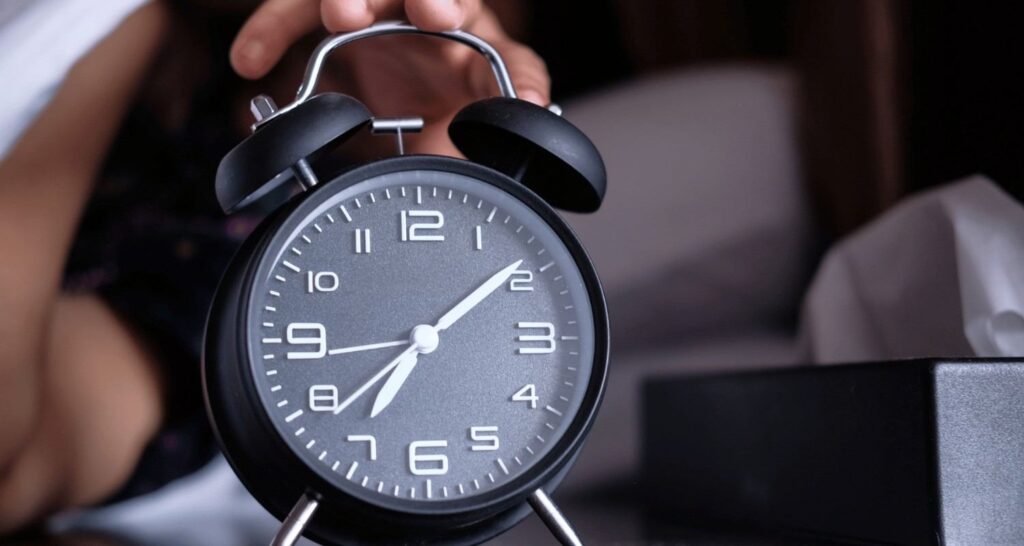
This is the part most likely to affect symptoms and the part most often treated as unavoidable.
Frequent travel disrupts sleep through time zone shifts, unfamiliar environments, early flights, and irregular schedules. Sleep disruption independently worsens mood, anxiety, and concentration, and for people with bipolar disorder it is a recognized trigger for mood episodes — which makes sleep protection a clinical priority rather than a comfort issue for that population specifically.
What helps: maintaining a consistent wake time where possible, timing daylight to your direction of travel (bright morning light helps after flying east; after flying west, avoid bright early-morning light), avoiding alcohol, which can disrupt sleep further, and treating the first night in a new location as predictably poor rather than as a sign something is wrong.
Building Treatment That Survives Travel
Front-load the planning. Discuss travel patterns at the start of treatment rather than after a problem occurs.
Schedule appointments around in-state periods. Booking further ahead is usually necessary and usually sufficient.
Keep a portable record. A current list of medications and doses, and a brief treatment history, is genuinely useful if you need care somewhere unfamiliar.
Choose stable regimens where possible. For someone traveling constantly, a medication requiring frequent monitoring or monthly in-person authorization is a poorer fit than one that does not, and that is a legitimate factor in selection.
For adults working with a practice based in Mount Laurel New Jersey or anywhere else in the state, the reasonable expectation is that a prescriber will plan around travel rather than treat it as an obstacle to compliance.
Frequently Asked Questions
Can I have a telehealth appointment while traveling out of state?
Generally not, unless your provider holds a license in the state where you are physically located. Licensure follows the patient’s location during the appointment, not their residence. Most people schedule appointments for periods when they are in-state. If you travel regularly to specific states, it is worth asking whether your provider is licensed in any of them. At ANK, you need to be physically in New Jersey for each visit.
What happens if I run out of medication while traveling?
Contact your prescriber as soon as you realize, since options narrow the longer you wait. Non-controlled medications can frequently be sent to a pharmacy near you, particularly a national chain that can access your record. Controlled substances are considerably more constrained. The reliable prevention is requesting refills before departure rather than when the supply is nearly gone.
How should I adjust medication timing across time zones?
Most psychiatric medications tolerate modest shifts without difficulty. Medications taken for sleep should follow the local sleep schedule rather than the original clock time. For medications where consistent blood levels matter, or where the time difference is large, discuss the plan with your prescriber before the trip rather than adjusting on your own.
Does frequent travel make psychiatric conditions worse?
It can, primarily through sleep disruption. Time zone changes, early flights, and unfamiliar environments all fragment sleep, and sleep disruption independently worsens mood, anxiety, and concentration. For people with bipolar disorder, sleep loss is a recognized trigger for mood episodes, which makes protecting sleep during travel a clinical priority rather than a matter of comfort.
If your work involves regular travel, that is worth raising at the start of treatment rather than after the first refill problem — most of the complications are preventable with planning.
The science: how we checked this
Sources
- CDC: Traveling Abroad with Medicine
- Lewis KS, et al. Sleep loss as a trigger of mood episodes in bipolar disorder. British Journal of Psychiatry, 2017
How we checked this
- Carry-on packing, original labeled containers, enough medicine plus extra, copies of prescriptions, and checking with embassies of destination and layover countries: CDC, Traveling Abroad with Medicine.
- Sleep loss triggering high mood in bipolar disorder, and the authors' note about shift work and international travel: Lewis et al., British Journal of Psychiatry (2017).
- The checklist also sums up this article's own advice on refills, time zones and scheduling.
- Seeing patients only while they're physically in New Jersey is ANK's own policy.
- Written in our own words from the sources above.
Clinically reviewed by
Alyssa Killion, MSN, APN, PMHNP-BC
Board-certified psychiatric mental health nurse practitioner and founder of ANK Behavioral Health, providing telehealth psychiatric care to adults across New Jersey.
Written by ANK Behavioral Health. Reviewed on October 27, 2026.